Posts

Showing posts with the label based

Arduino Killer ESP8266 Based NodeMCU

Image
Arduino Killer ESP8266 Based NodeMCU The ESP8266 WiFi Module is an embedded SOC with integrated TCP/IP protocol stack. It helps   microcontrollers  access to your WiFi network. IoT devices exploits this facility. Lot of firmwire you can use with ESP8266. Many ESP8266 comes with AT firmware for serial communications. NodeMCU is one of them, which supports lua programming language. Latest ESP8266 boards contains plenty of I/O lines and ADC,PWM, I2C,SPI  features like Arduino. It is very cheap($3-Rs.180) All of the above board build with ESP8266. Almost all are same.
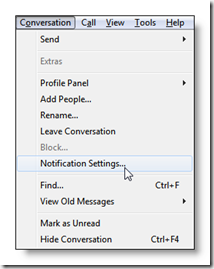
Are you involved in Skype group chats that are distracting – then set a notification trigger based on your name

Image
Are you involved in Skype group chats that are distracting – then set a notification trigger based on your name We use Skype extensively for inter-office communications and a colleague recently showed me how she could ignore the Skype group chats unless someone specifically typed her name (or other configured words).  This is very useful if you want to ignore chats unless your name or other topics come up.  Here�s how it�s done: 1) Open a chat window (group chat or 1-on-1 chat) 2) Select the pull down menu: Conversation->Notification settings 3) Select the radio button �Notify me only if these words are mentioned� and type in some trigger words and phrases: Hope this helps shield you from �noisy� group chats and you can get some work done. BTW: there are some nice useful features under that �Conversation� pull down menu � why not try some out now eg: Profile panel �> Set topic

Asterisk PIN based dialing

Image
Asterisk PIN based dialing As an Asterisk administrator, I often have clients requesting the ability to have users enter a PIN before dialing. This is useful on factory floors where users roam between different phones, but still need to be held accountable for their calls. Apart from just authenticating the user, the dialplan also has to ensure that the account code is correctly assigned in the CDR. To this end Asterisk provides the AUTHENTICATE dialplan application. Authenticate has many different options that makes it very versatile, but what I have found most useful is to use the file function. This allows you to create a file with account codes and MD5 password hashes. The file needs to be structured as follows: accountcode:passwordmd5 When using the file mode, the account code will be written into the CDR logs. For example: vim /etc/asterisk/pins.conf You may use a different file/location 500:8c8a58fa97c205ff222de3685497742c 501:c460dc0f18fc309ac07306a4a55d2fd6 502:d91caca74114d81...